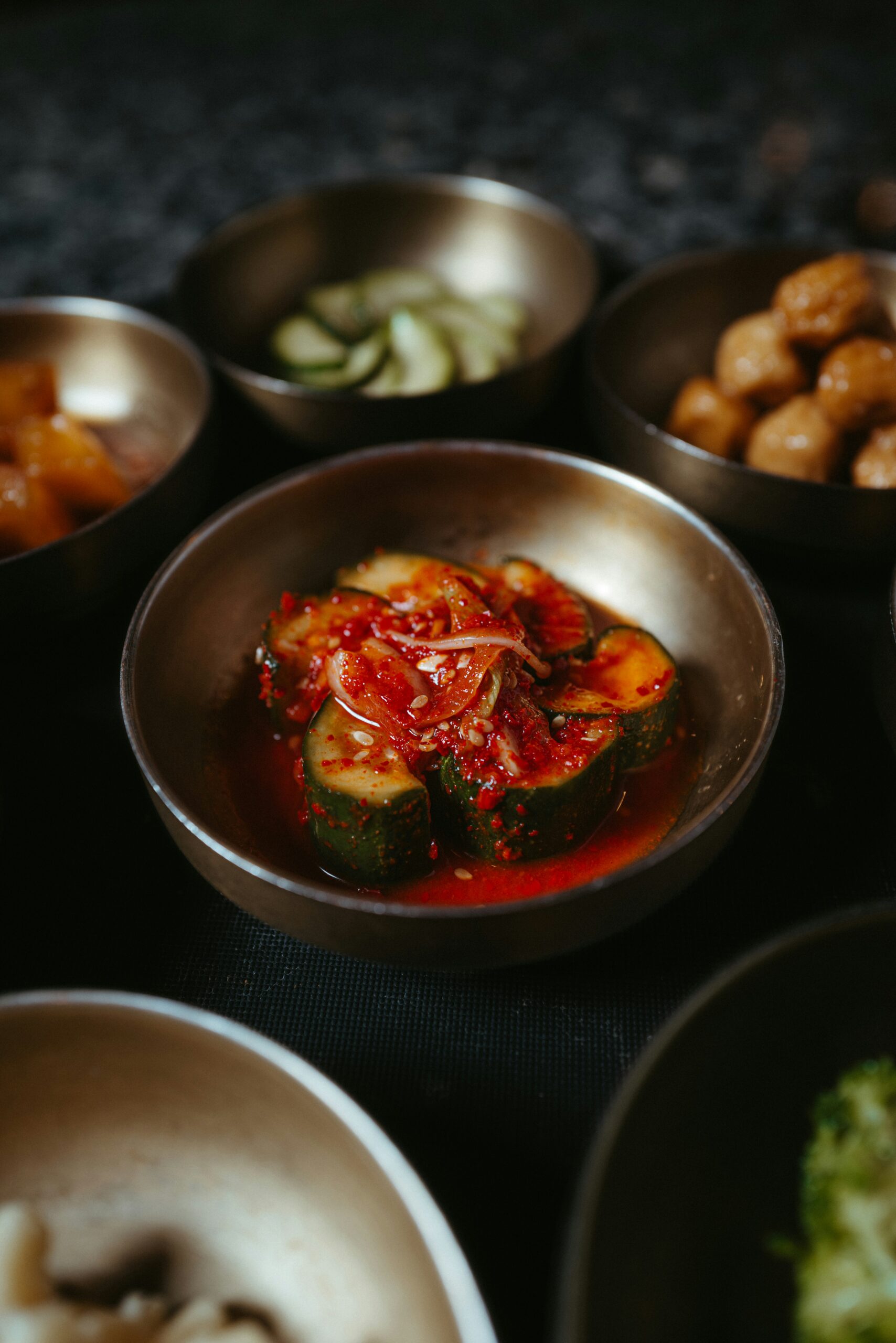
Spicy Kimchi (Baechu Kimchi) — A Fermented Symphony of Heat, Funk, and Umami
Kimchi is Korea’s soul food — ancient, alive, and ferociously flavorful. The moment you unscrew that jar, the unmistakable aroma of fermented cabbage, garlic, and red chili fills the air. It’s pungent, bold, and undeniably addictive. This recipe captures that perfect balance of heat, tang, crunch, and umami that makes kimchi an essential on every Korean table.
🥬 INGREDIENTS – THE FOUNDATION OF FLAVOR
🧂 FOR THE CABBAGE:
- 1 medium Napa cabbage (about 2–3 lbs)
- 1/4 cup kosher salt (non-iodized, to prevent bitterness)
- Filtered water, enough to soak the cabbage

You’ll start with fresh Napa cabbage — its leaves thick yet tender, ideal for absorbing the fiery paste. The salting step pulls out moisture, transforming each leaf into a crisp-tender vessel ready to soak up flavor.
🍚 FOR THE SWEET RICE PASTE:
- 1 tablespoon glutinous rice flour
- 1/2 cup water
- 1 tablespoon sugar

This paste adds body and a subtle sweetness to the spice blend. As it simmers, the flour thickens and the sugar melts, creating a glossy, warm-smelling base that clings beautifully to the vegetables.
🌶️ SPICY SEASONING MIX:
- 3–6 tablespoons gochugaru (Korean red pepper flakes) — more = hotter
- 5 garlic cloves, finely minced
- 1-inch piece of ginger, peeled and minced
- 2 tablespoons fish sauce (or soy sauce for vegan version)
- 1 tablespoon soy sauce
- 2 scallions, chopped
- 1 small carrot, julienned (for crunch and color)
- 1/2 small Korean radish or daikon, julienned (adds juicy texture)

Gochugaru isn’t just spicy — it’s smoky, slightly fruity, and vividly red. Combined with pungent garlic, earthy ginger, and salty fish sauce, this mix creates a scent that punches you in the face — in the best way possible.
🔪 STEP 1: SALTING THE CABBAGE — BEGIN THE TRANSFORMATION
- Slice the cabbage lengthwise into quarters, then chop into 2-inch chunks.
- Toss the cabbage pieces in a large bowl with kosher salt, layer by layer.
- Soak with just enough water to cover. Let sit for 1.5–2 hours, turning every 30 minutes.

🔍 What’s happening?
The salt draws water out of the cabbage, softening it while concentrating its flavor. The smell? Think fresh cabbage with a whisper of sea air — clean, vegetal, and a little briny.
- Rinse the cabbage thoroughly 2–3 times to remove excess salt, and let it drain for at least 20 minutes.
🍚 STEP 2: MAKE THE SWEET RICE PASTE — THE VELVETY CARRIER
- In a small saucepan, combine rice flour and water.
- Simmer over medium heat, stirring constantly until it thickens to a thin pudding-like consistency (~2–3 min).
- Stir in sugar, let it melt, and set aside to cool.

👃 Aromas: You’ll smell a warm, toasty rice scent mingled with sugar. Subtle, comforting — a gentle contrast to the fire that’s coming.
🌶️ STEP 3: CREATE THE SPICY FLAVOR PASTE — THE HEARTBEAT
In a mixing bowl, combine:
- The cooled rice paste
- Gochugaru
- Minced garlic and ginger
- Fish sauce and soy sauce
- Chopped scallions
- Julienned radish and carrot
🖐️ Mix until it becomes a rich, red, sticky paste. It should look like lava and smell even stronger — salty, spicy, garlicky, with an umami depth that hints at fermentation.

👃 Smell: Sharp garlic hits first, followed by the smoky warmth of gochugaru and the funky undertone of fish sauce.
🧤 STEP 4: COMBINE — MASSAGE WITH LOVE (AND GLOVES)
- Put on food-safe gloves (trust me, this paste stains and burns).
- Gently massage the paste into the cabbage, turning and coating every leaf.
- Work slowly, ensuring everything is evenly seasoned.

👅 Taste a piece (if you dare) — it should be salty, spicy, sweet, and deeply savory.

🫙 STEP 5: PACK AND FERMENT — LET IT BREATHE
- Pack the kimchi tightly into a clean glass jar or ceramic crock. Press down to eliminate air bubbles.
- Leave 1 inch of headspace at the top.
- Close loosely or use a fermentation lid.
🕰️ Leave at room temperature (65–75°F) for 1–2 days. Then move to the refrigerator.

⏳ Let it ferment for at least 3–5 days before tasting. The longer it sits, the funkier and tangier it gets.
🧊 STORAGE & AGING
- In the fridge: up to 3 months — it continues fermenting slowly.
- After 2–3 weeks: it becomes deeply sour and complex — perfect for stews, pancakes, or fried rice.
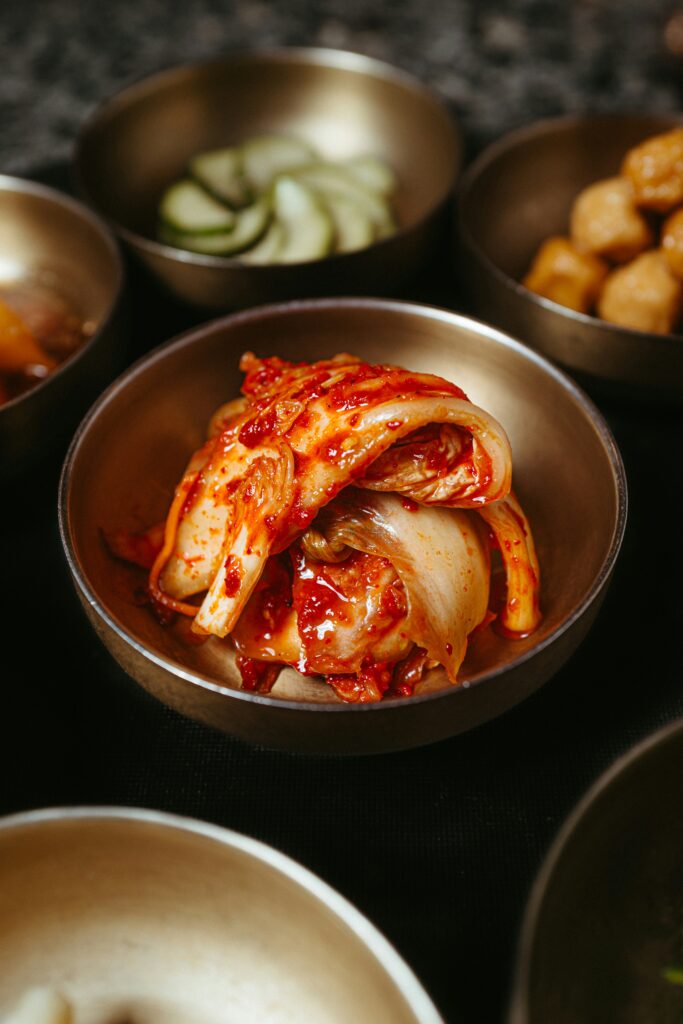
🔥 TASTE & TEXTURE EXPERIENCE
Day 1: Crunchy, fresh, spicy — like a chili-drenched salad.
Day 3–5: Slightly tangy, more tender, balanced.
Day 14+: Funky, sour, soft, but still textured. The garlic deepens, and the chili mellows into a smoky warmth.

Smell: Like fire and ocean collided in a garden of garlic.
Taste: Sharp, tangy, spicy, umami-rich. An explosion that starts with heat, shifts to sour, then lingers sweet and savory.
✨ BONUS: HOW TO ENJOY
- As a side dish with rice and grilled meats
- In kimchi jjigae (stew) – older kimchi is best!
- On burgers, tacos, or grilled cheese (trust me)
- Fried into pancakes or mixed into scrambled eggs

No responses yet