
Navratri — meaning “nine nights” — is a time of deep spiritual reflection and vibrant cultural expression across India. In Rajasthan, the land of royal heritage and colorful traditions, Navratri takes on a unique flavor that beautifully merges devotion, discipline, dance, and deeply rooted culinary traditions.
The Essence of Navratri in Rajasthan
In Rajasthan, Navratri is observed with:
- Fasting (vrat)
- Durga puja and ghatasthapana (kalash sthapana)
- Garba and dandiya nights (especially in cities like Jaipur and Udaipur)
- Temple processions and community satsangs
- Jagrans (night-long singing in praise of the Goddess)
Homes are cleaned and adorned with flowers, diyas, and traditional rangolis. Families gather to worship Maa Durga in her nine divine forms, each day representing a different avatar.
The Ritual of Fasting in Rajasthan
Fasting during Navratri is not just a religious act — it is a physical and spiritual detox. People observe fasts with deep sincerity, often going without grains, pulses, onions, garlic, and regular salt.
There are typically 3 types of fasts observed:
- Nirjala Vrat – Water-only fast (rare and mostly for saints or very devout individuals)
- Phalahari Vrat – Only fruits, milk, and nuts are consumed
- Upvas Thali – Includes specific fasting grains and cooked foods without prohibited ingredients
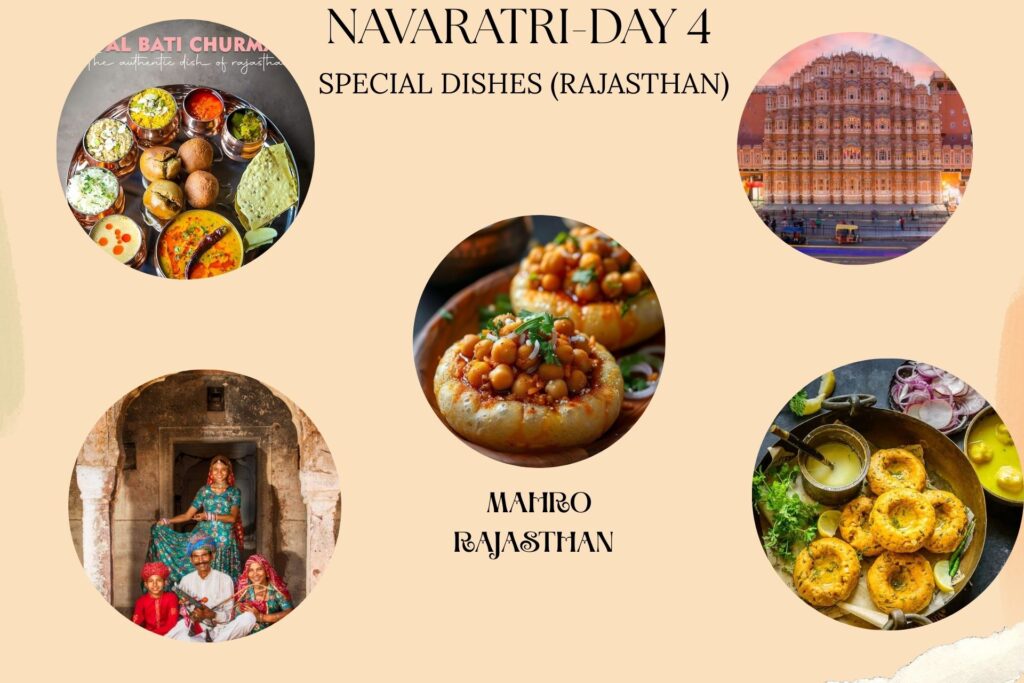
Traditional Fasting Foods of Rajasthan
Rajasthani vrat (fasting) cuisine is full of flavor, variety, and nutrition, even without the use of common ingredients like grains or garlic.

No responses yet